Boudoir and Nude Photography Ideas on the Beach
Styled nude. Wild beach. Pure artistry.

– 6 min read


Styled nude. Wild beach. Pure artistry.
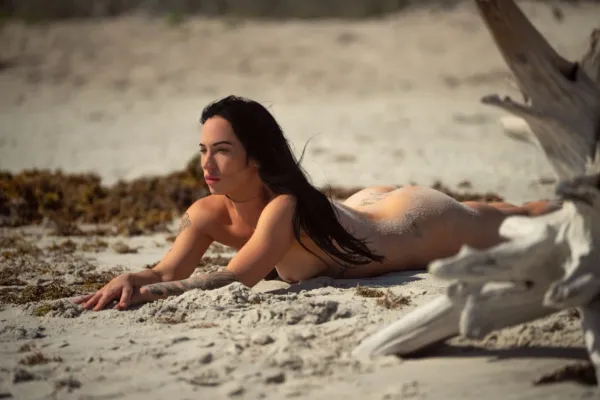
There is something ancient about the beach — not just beautiful, but powerful. It strips away distractions. It offers light that feels eternal, wind that sculpts, water that soothes, and space that invites truth. For boudoir photography, the beach isn’t just a backdrop — it’s an emotional setting, a sacred stage where the body and the earth can meet in raw elegance.

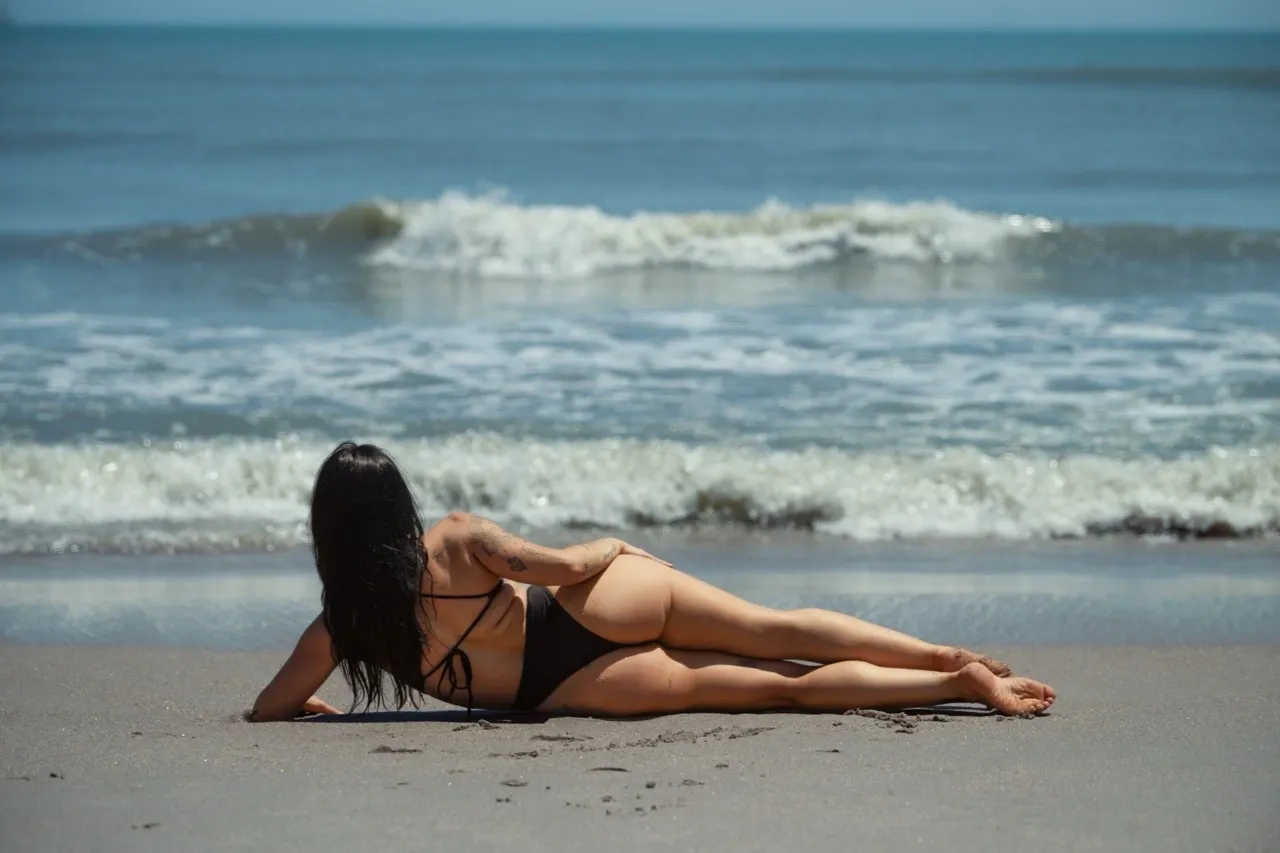
Why call it boudoir if it’s shot on the beach — and in a bikini? At first glance, it may look like a typical beach bikini shoot, but what defines it as boudoir is the posing. The focus isn’t on what the subject is wearing — or not wearing — but on how she moves, how she holds herself, and how the body is framed with intention. The elegance is in the expression, not the outfit. As always, the environment — whether it’s sand, driftwood, water, or wild greenery — is just a backdrop. Boudoir is a feeling, not a location.
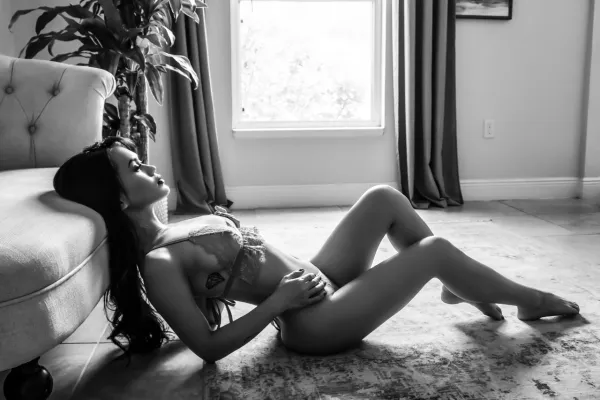
If you look closely at the poses throughout this session, you’ll notice something familiar: these are the exact same boudoir poses we teach and use inside the studio at Believe in Boudoir. Nothing changes except the location. The curve of the spine, the soft bend in the wrist, the intentional angles — they’re all rooted in the same posing fundamentals we apply in front of a seamless backdrop or studio set.
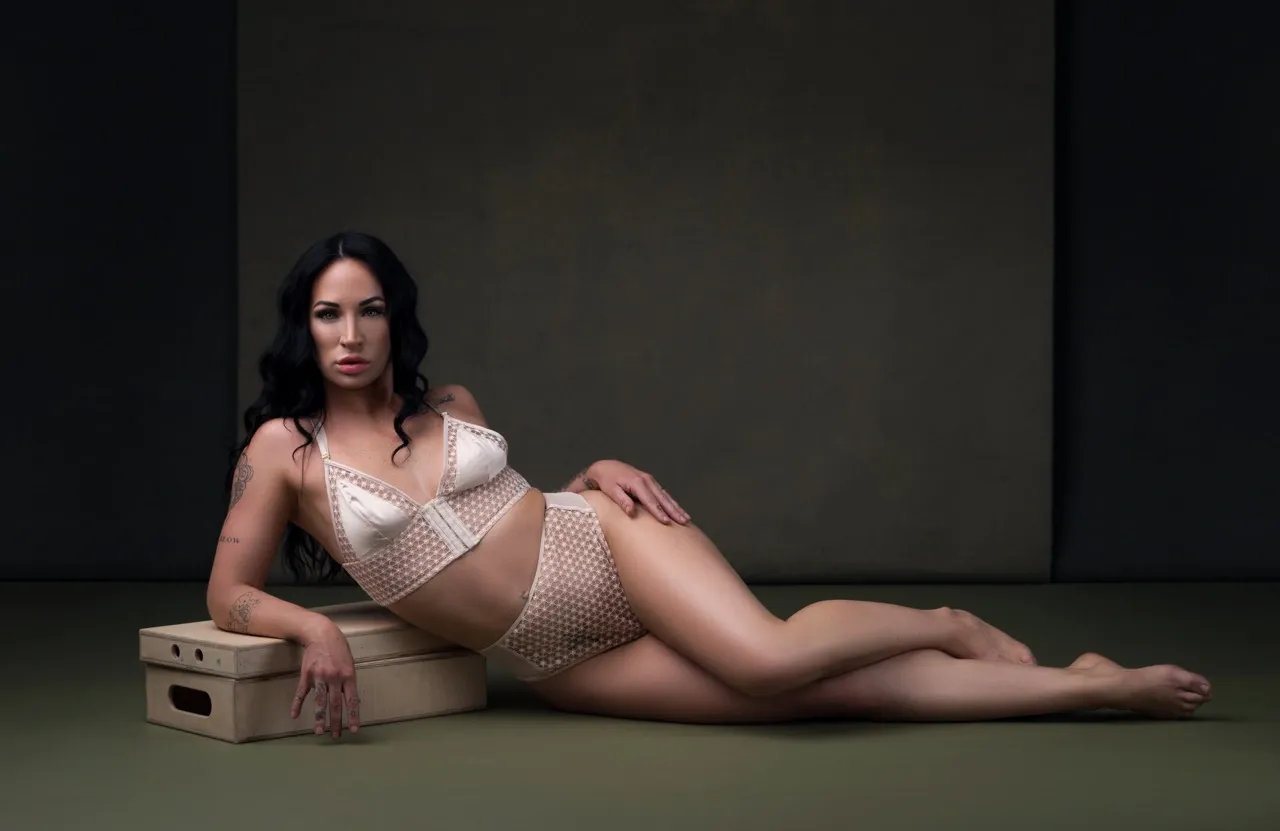
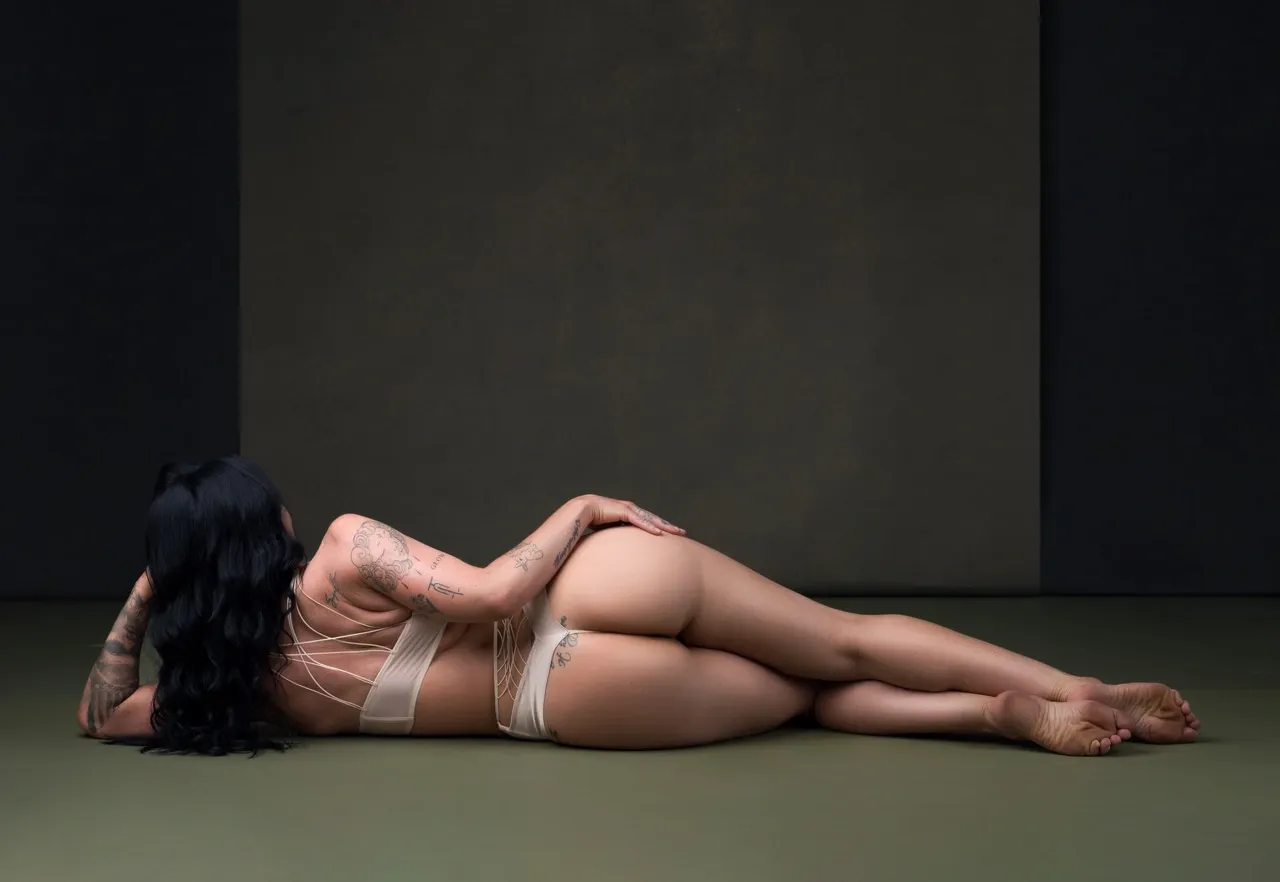
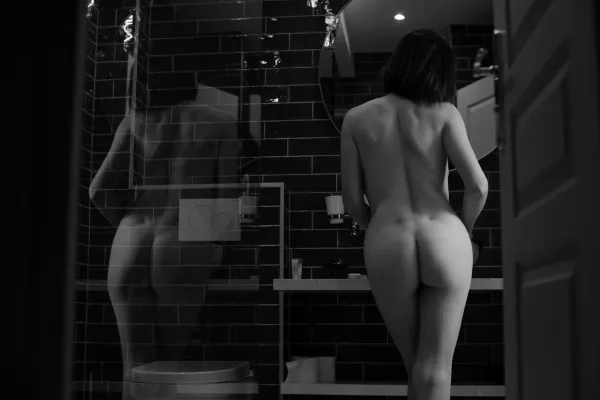
To illustrate this, take a look at the side-by-side comparison: the same model, the same pose, captured in two completely different environments. One is styled in a controlled studio with clean backdrops and soft light. The other is barefoot in the sand, surrounded by driftwood and sun. Yet both speak the same visual language. The backdrop has changed — the elegance hasn’t.
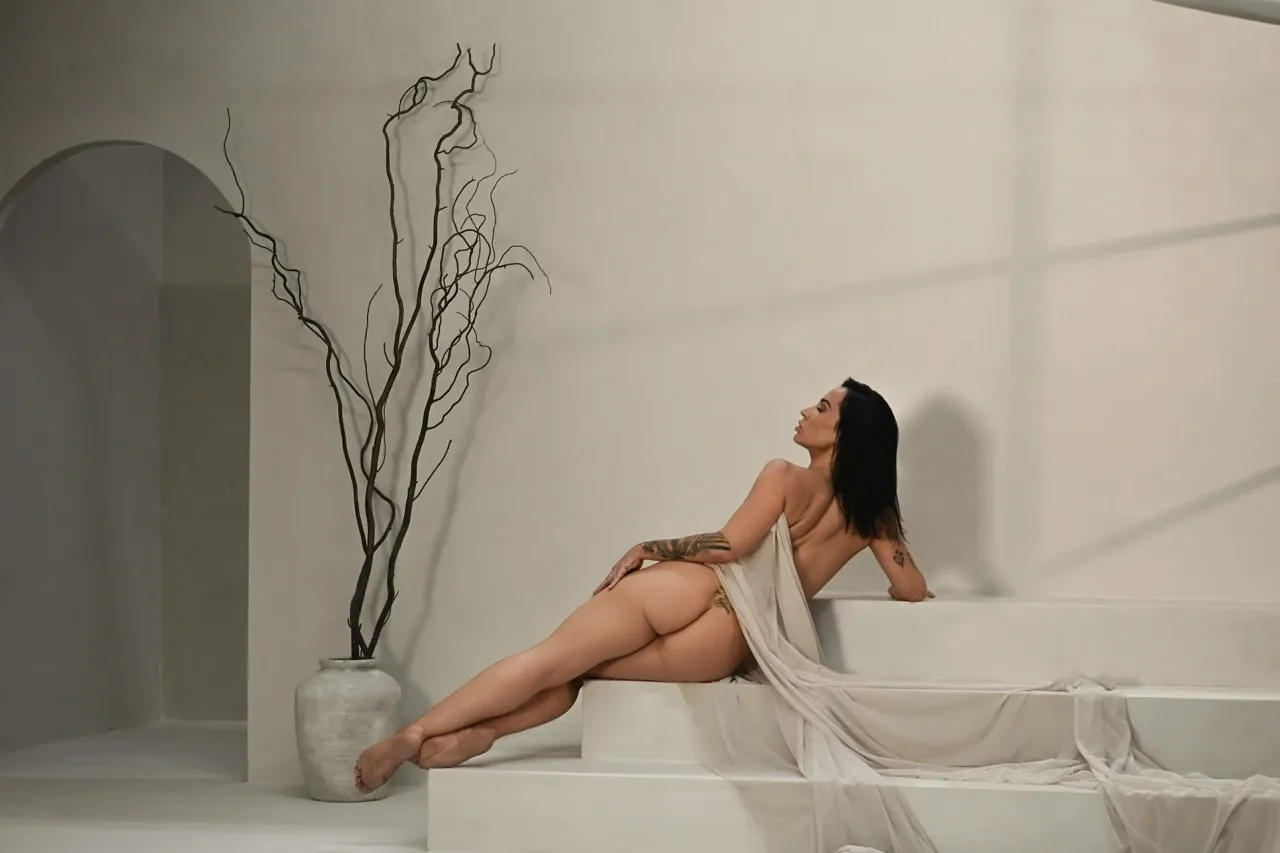
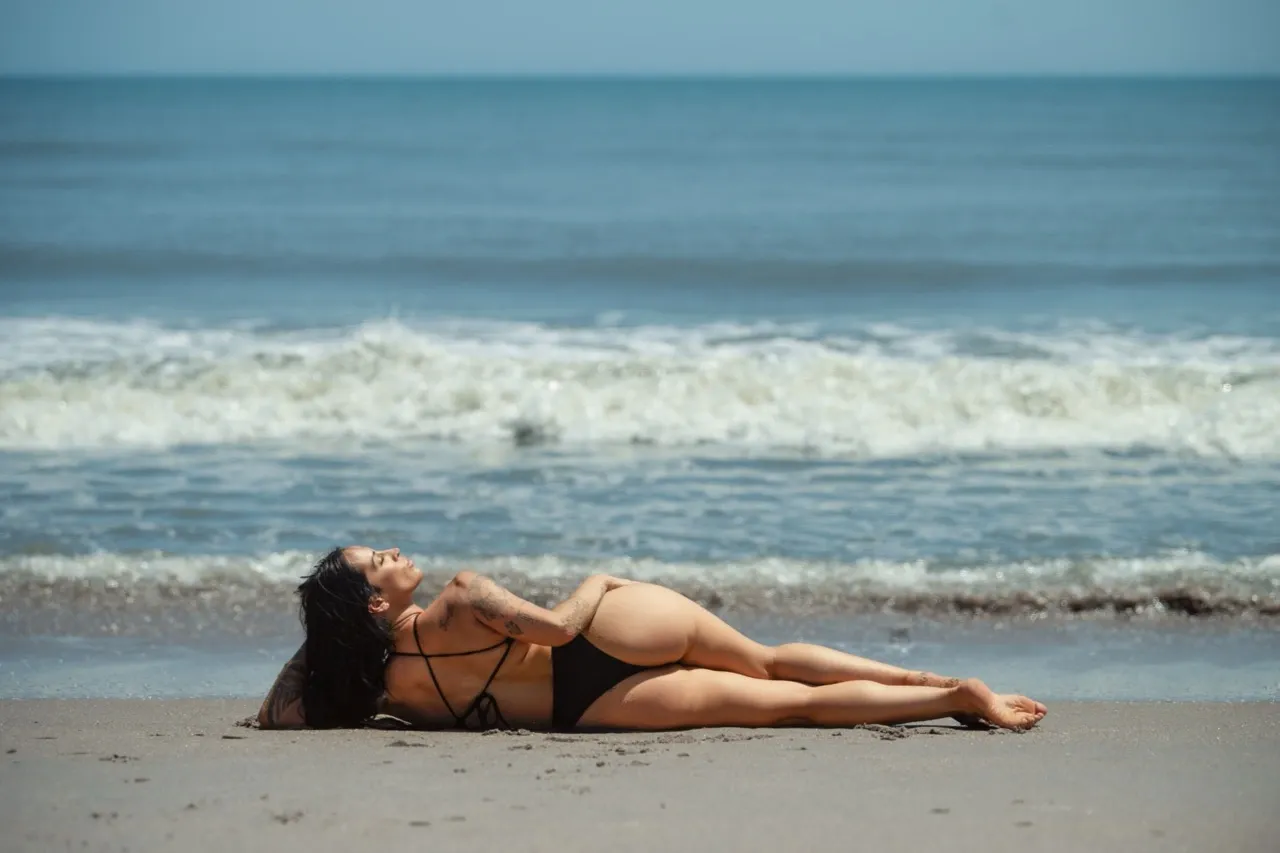
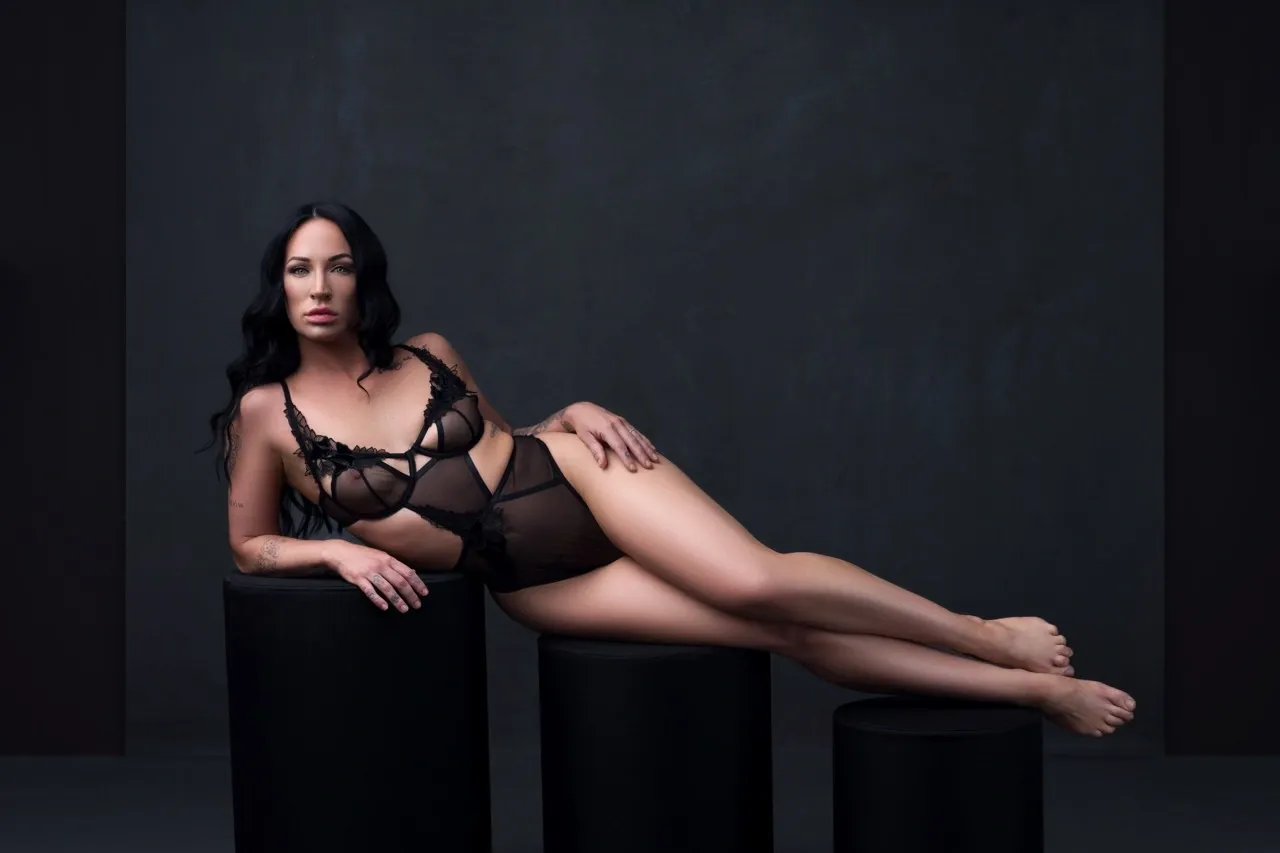
This is why we call it boudoir on the beach. It’s not about what she’s wearing or where she’s standing. It’s about how she’s posed, how she’s lit, and how she’s empowered in front of the lens. The principles of boudoir don’t disappear outside the studio — they just become more free, more connected, and often, more breathtaking.
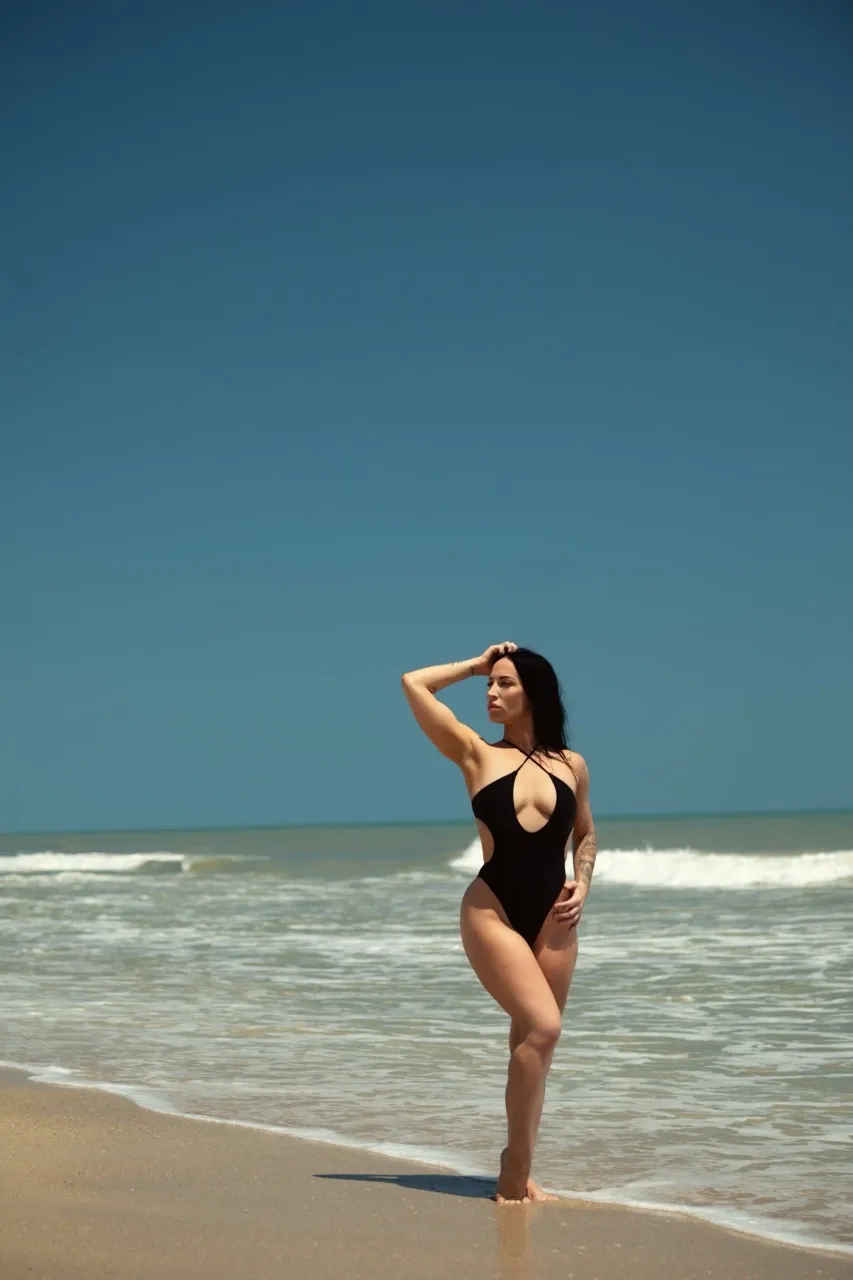
The shoreline offers more than just a backdrop — it adds depth, dimension, and visual rhythm. When positioning your subject near the water, look for the expansive feeling it creates. Miles of ocean stretch behind her, instantly adding scale and serenity. But beyond that, watch the curves: the subtle roll of waves can mirror the curves of the body, creating a visual harmony between subject and setting. Sometimes you’ll get lucky with a perfect wave line; other times, it’s the shape of the pose itself that completes the motion. Always pay attention to how water moves, layers, and reflects light — because when it aligns with your subject’s form, it doesn’t just complement the image — it completes it.
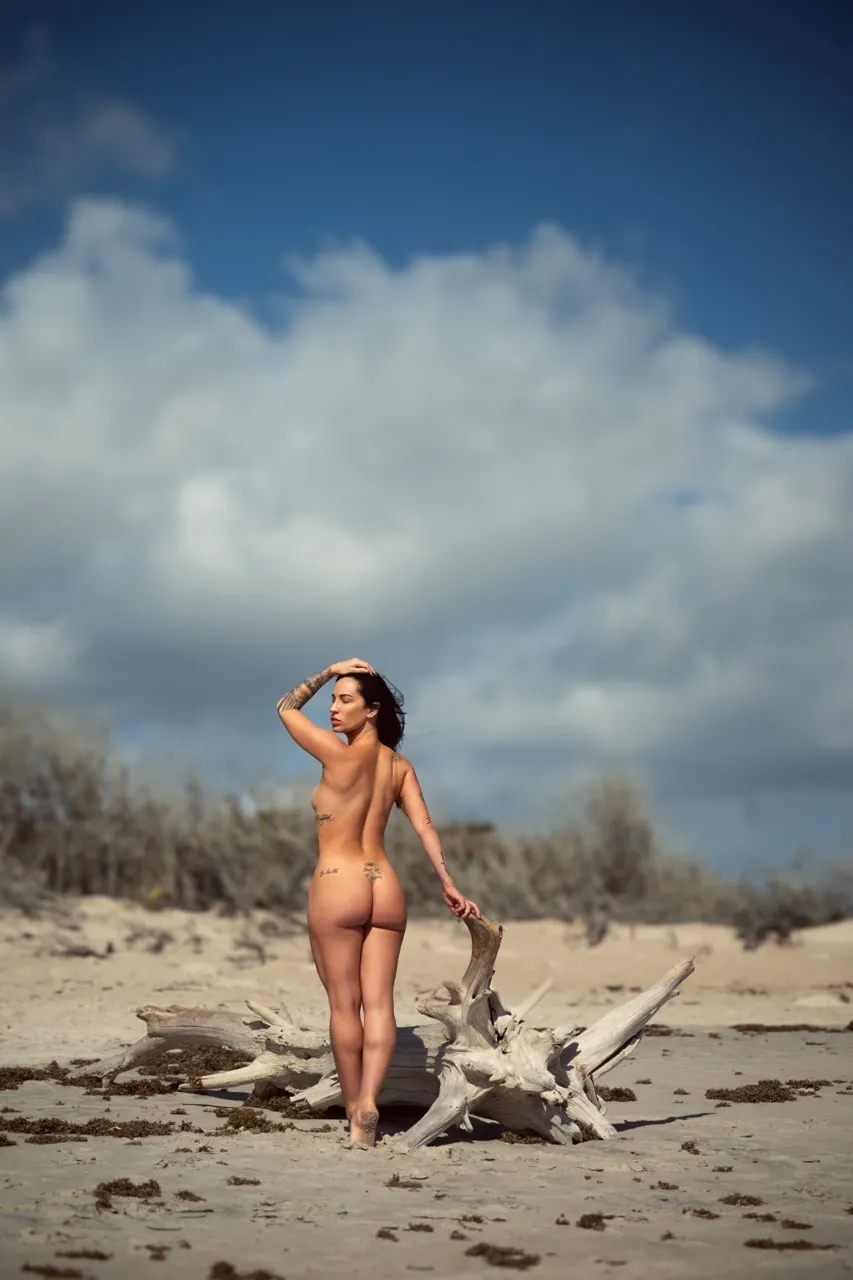
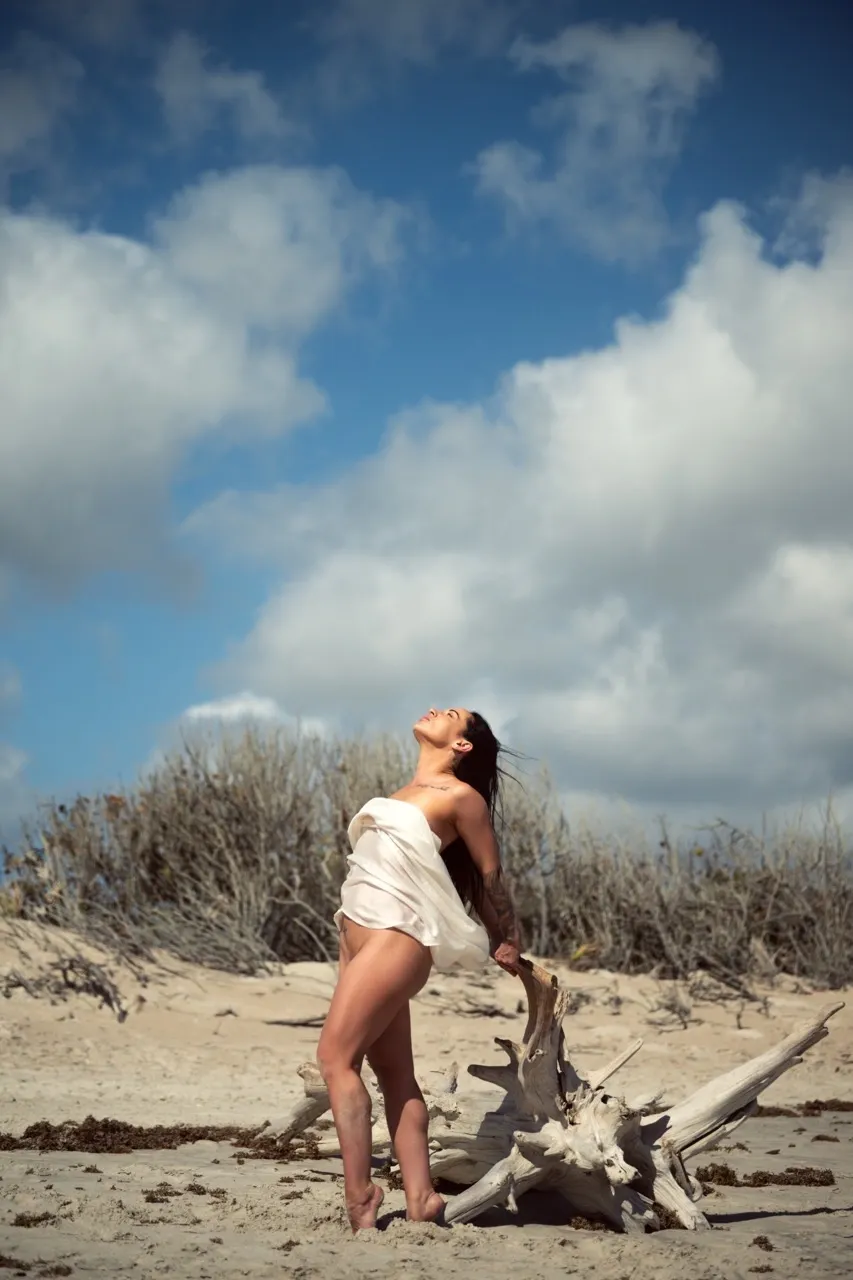
When posing outdoors — especially on an open beach — the landscape can feel vast and unstructured. That’s why it’s so helpful to find a natural element that grounds your subject, both physically and compositionally. Driftwood is one of those treasures. Its shape, texture, and organic lines add visual interest, but even more importantly, it becomes a posing partner. In boudoir, we often rely on a chair or bed to support angles, tension, and balance. In nature, you’ll need to scout for the equivalent — something your client can lean on, hold, or wrap around. Look for pieces with curves, contrast, or negative space that invite interaction. A great posing element doesn’t distract from the subject — it enhances her presence and gives the pose more structure and depth.
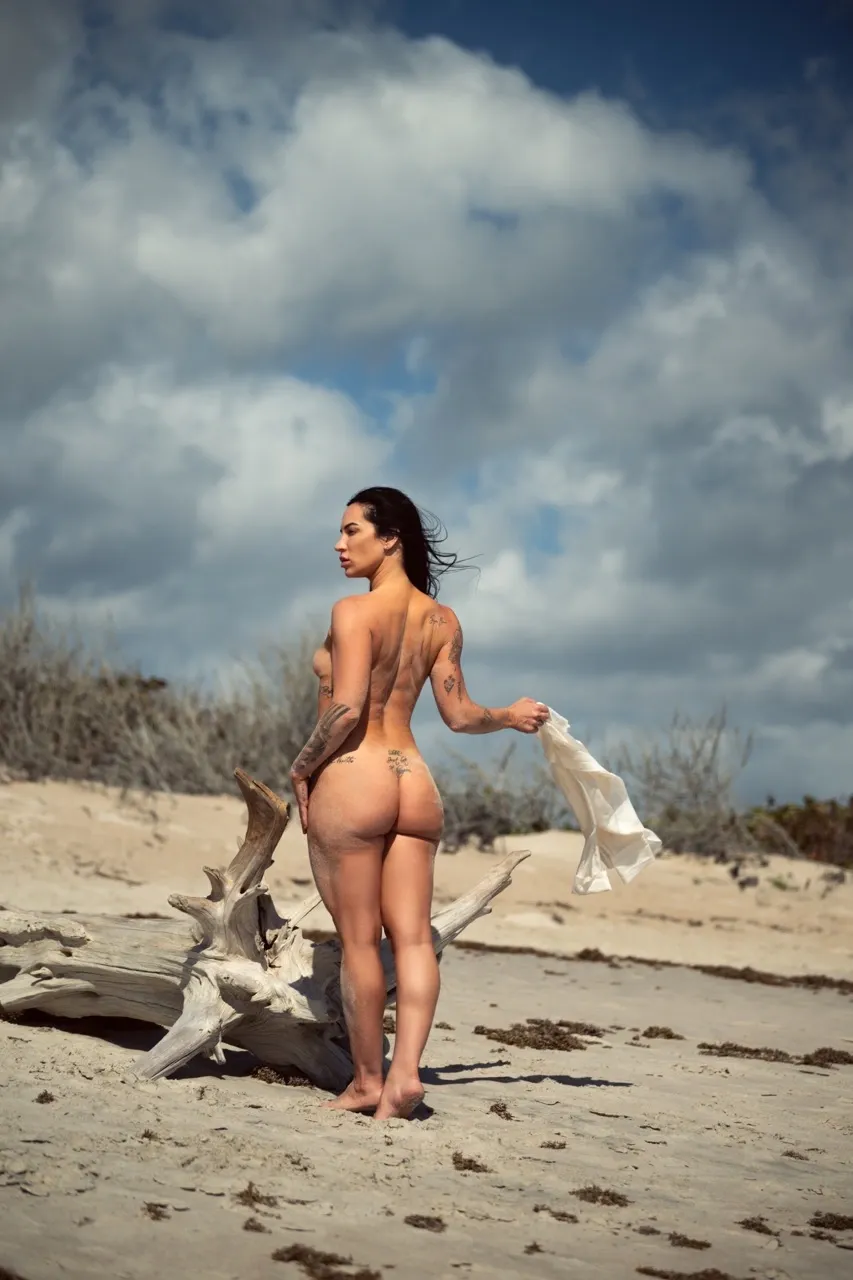
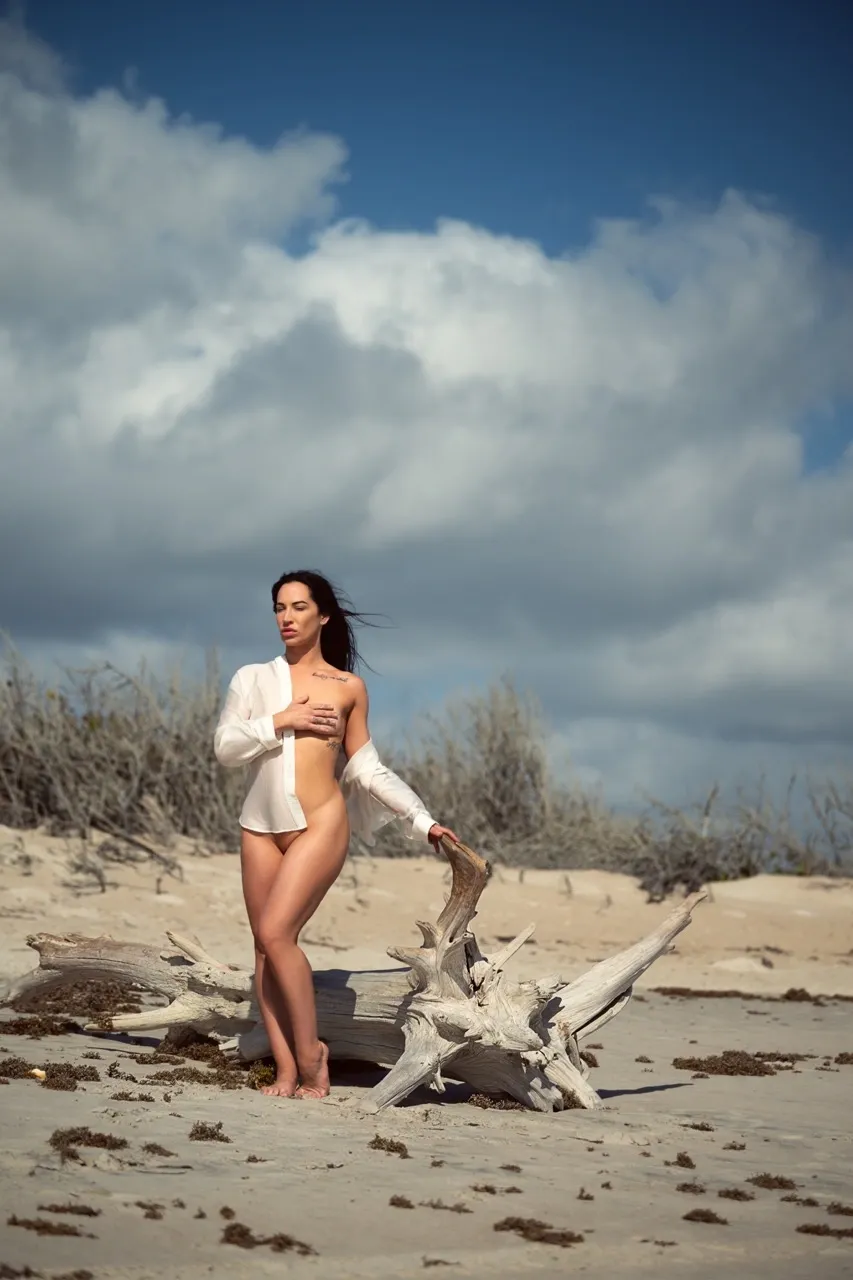
There’s always something sexy about that moment when the wind catches an outfit just right — when a shirt lifts, or a skirt flutters, and you catch a tiny glimpse of what might be there. It’s weird, right? You could have ten totally nude women walking down the beach, and nobody bats an eye. But one girl in a loose mini skirt, no bottoms, maybe even wearing a bikini underneath — that’s where all the eyes go. Why? Because people are dying to answer the mystery: what’s under the skirt?
It’s not even about what’s shown — it’s about what’s not. That little second of uncertainty, that tease, grabs attention in a way full nudity just doesn’t. In photos, we use stuff like flowy shirts to create those moments. One gust of wind, one perfectly timed shot, and suddenly you've captured a one-second peek that feels like it lasts forever. That’s the difference between a sexy photo and one that makes people stop and stare.

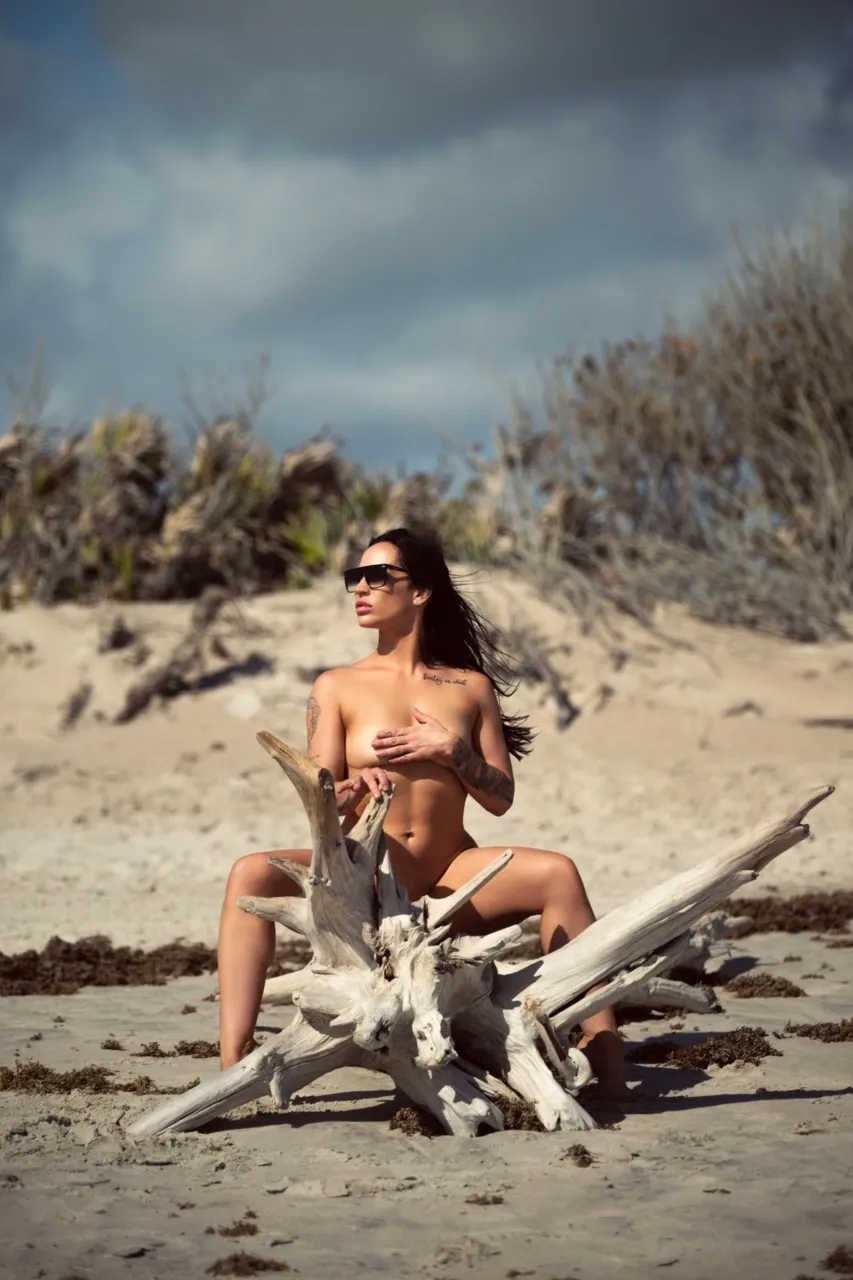
You’ve probably heard someone joke, “She was wearing nothing but sunglasses.” It’s always funny — but also kind of brilliant. There’s just something striking about a nude body with one bold, recognizable accessory. Sunglasses and nude. A scarf and nude. A choker and nude. Nude in just high heels. It’s the contrast that makes it unforgettable.
These little touches don’t just add style — they add story. That one item suddenly changes everything. It makes the image feel styled, intentional, and way more powerful than just being naked. That’s exactly the kind of storytelling we do in boudoir photography — even at the beach. Sunglasses on a sunny day? Totally normal. But sunglasses while nude and straddling a piece of driftwood? That’s a whole different vibe. And it works. Because the tease, the tension, the unexpected — that’s where the magic happens.
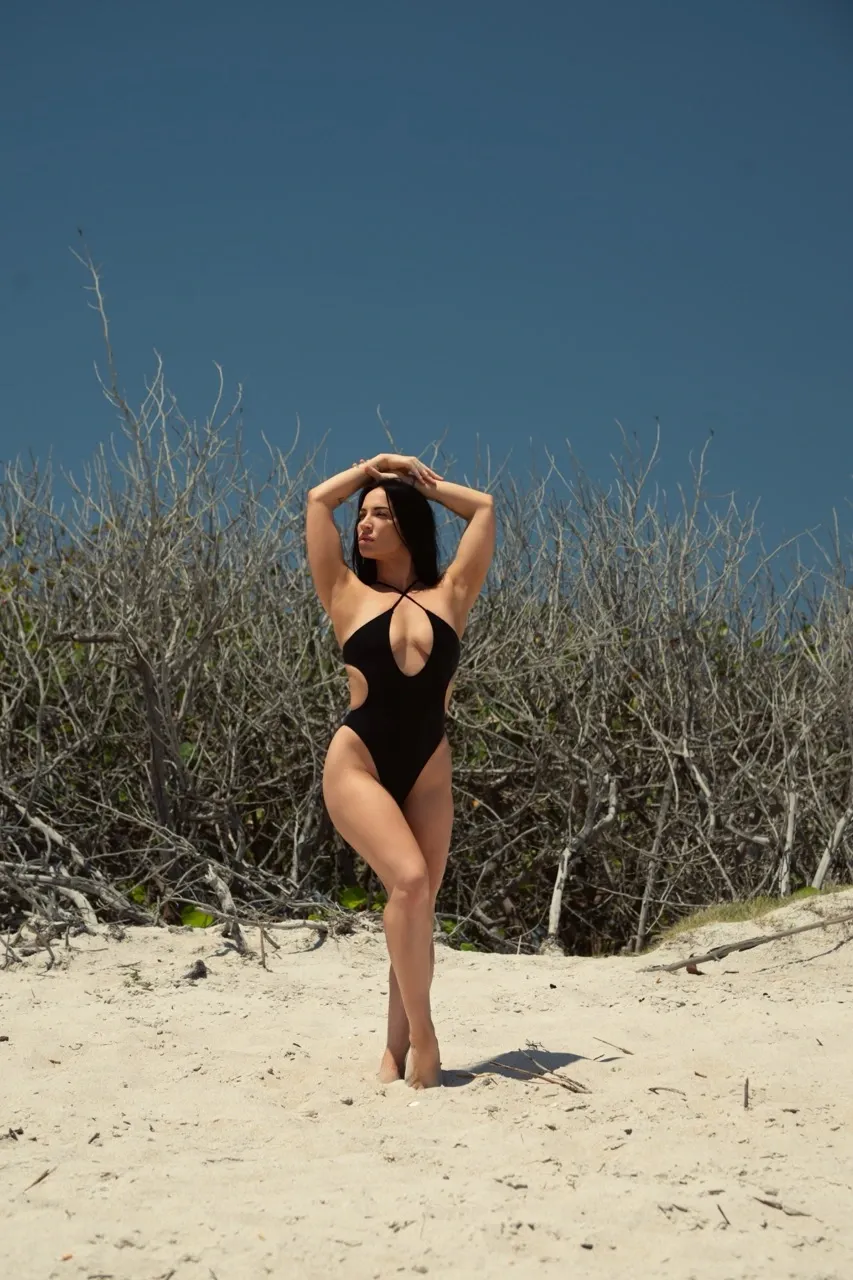
At first glance, it might feel a little off — swimwear and wild tangled bushes? Isn't that outfit meant for the ocean? That contrast is exactly what makes the image interesting. You expect to see a bikini in the water, not in front of thorny, dry brush. But that unexpected pairing makes you stop and look.
The wild bushes also bring texture. They create contrast and depth that you just don’t get with the flatness of open sky or waves. That’s something we always look for on the beach — texture, layers, and something unusual.
A beginner might default to putting the model in the water and going for the classic "hair flip" splash shot. But a more experienced eye looks for stories. For light. For shape and posing. For compositions that make you wonder what’s happening and why. That’s where the real magic lives — in the places most people overlook.
This session proved what every boudoir artist should remember: you don’t need more. You just need one thing — one item of clothing, one natural element, one bold pose — used with care, emotion, and trust. The beach will offer everything else: light, texture, movement, stillness. Let your client exist in that space, styled lightly, but emotionally rich.
Whether it’s a swimsuit that sculpts, a scarf that moves, or a piece of driftwood that invites strength, your job is to see the environment not as background — but as collaborator. When you do that, nude photography becomes more than beautiful. It becomes unforgettable.

Get access to 50+ boudoir courses with $1